
TODDLER LEARNING ENVIRONMENT
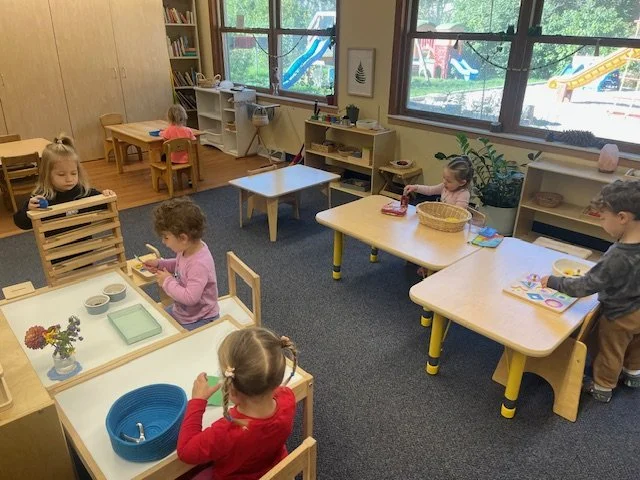
Toddler Program
Ages 18-36 months
HALF DAY 8:00AM - 11:00AM
FULL DAY 8:00AM - 3:00PM
After-school care available
Toddler Program
The toddler room is a home-like environment where children can have a peaceful and loving introduction to Montessori school. Children develop self confidence as they learn to function independently within a prepared Montessori-like environment. They develop both fine motor and large motor skills by using the carefully chosen classroom materials. They learn social skills in an enriching atmosphere of understanding, respect, and support. Toddlers are very sensitive to learning language, so we expand their growing vocabularies with songs, stories, poems, art, and an abundance of stimulating activities.
The New World Montessori Toddler Community is a nurturing, home-like setting where children from 18 months to 3 years old are able to make the most of what Dr. Montessori called “the absorbent mind.” At their young age, learning is constant, effortless, and utterly joyful.
The Montessori toddler classroom is carefully prepared to provide a wide range of stimulating, engrossing activities within a caring, calm environment. The materials are placed low on shelves so children learn to choose and use them independently and productively. Each material has a purpose in helping children develop their potential. As they explore their classroom, absorbing language and concepts, small children gain independence, self-discipline, and social skills.
Children feel safe and secure in a Montessori setting because the room is designed to meet their needs for order, consistency, and purposeful activity. They gain confidence as they discover they are capable of completing tasks successfully.
Read about how to bring Montessori ideas for toddlers into your home.
Key aspects of the toddler program:
gentle atmosphere of respect and encouragement
uncluttered environment
balance between freedom and limits
individualized learning
developmentally appropriate activities, including self care and care of environment
exposure to basic math and science concepts
a focus on grace and courtesy
language and vocabulary enrichment
exposure to cultures and languages
creative expression
gardening and nature studies

PRIMARY LEARNING ENVIRONMENT
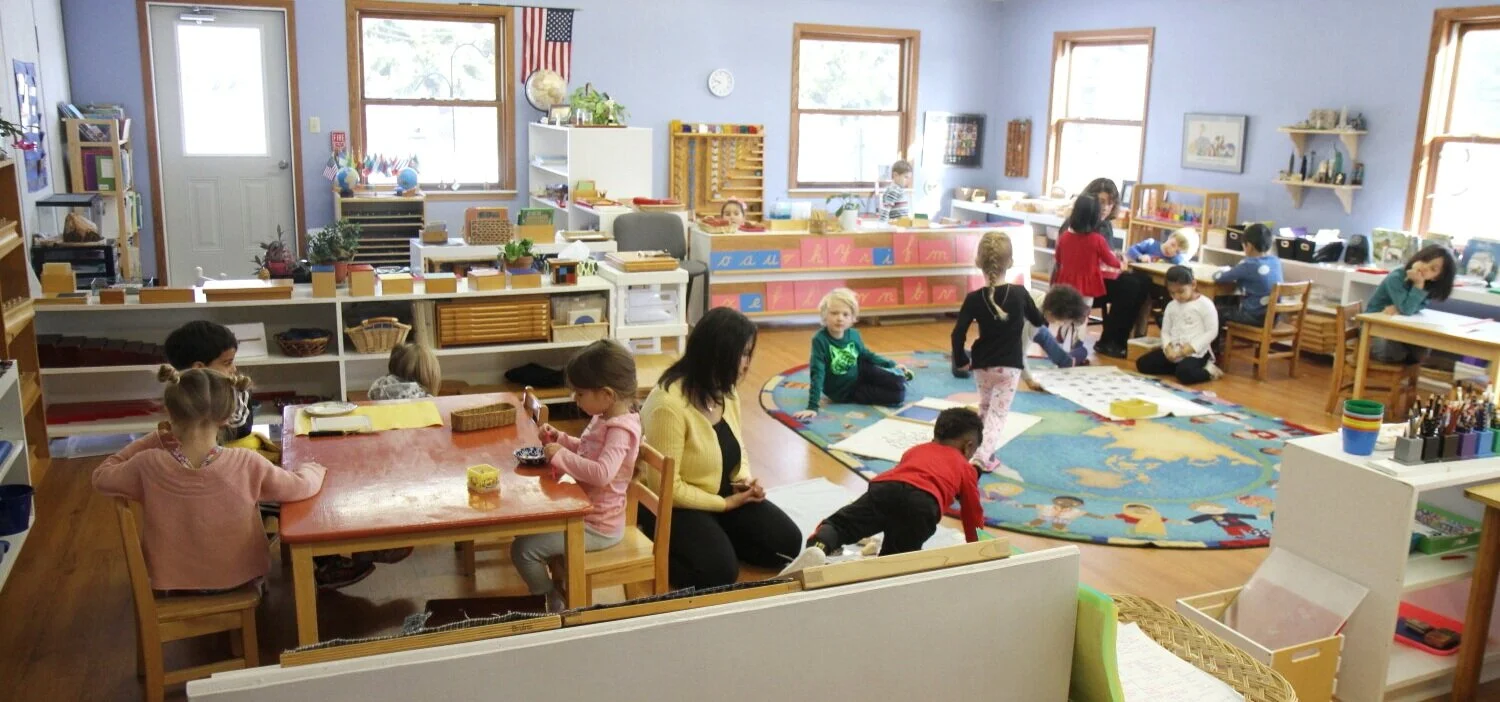
Primary Program
Ages 2 1/2 - 6 years
PRIMARY 8AM - 11AM
BAMBINI 11AM - 3PM
EXTENDED DAY 11AM - 3PM
After-school care available
Primary Program
In a Montessori classroom, children experience an environment that encourages independence, discovery, respect for others, and unlimited opportunities to learn. Their lessons include practical life, sensorial, mathematics, language arts, and cultural activities. The Montessori teaching materials translate concepts into beautiful, inviting, and self-correcting activities that nourish what Maria Montessori called the “absorbent mind” of the child. The morning includes a snack and a group activity as well as ample time for individual exploration.
At New World, we believe that children are the creators of the adults they will become. The Montessori classroom aids children in reaching their fullest potential in a harmonious and joyful environment. By using inviting materials that allow for self-correction and self-paced work, children flourish and feel deep satisfaction as they develop social graces, muscular coordination, concentration, self-discipline and independence.
In the Children’s House, children ages 2 ½ through 6, are introduced to practical life skills, sensory development, mathematical concepts, reading, writing, vocabulary, science, geography, music, and art.
Children learn to follow tasks through to completion, put things away, and share materials. Academics are introduced through concrete, manipulable materials that employ all five senses and lay the groundwork for abstract thinking. Children are free to make choices while they also learn the importance of kindness, patience, and respect for others.
Primary program focuses on these six areas
Language
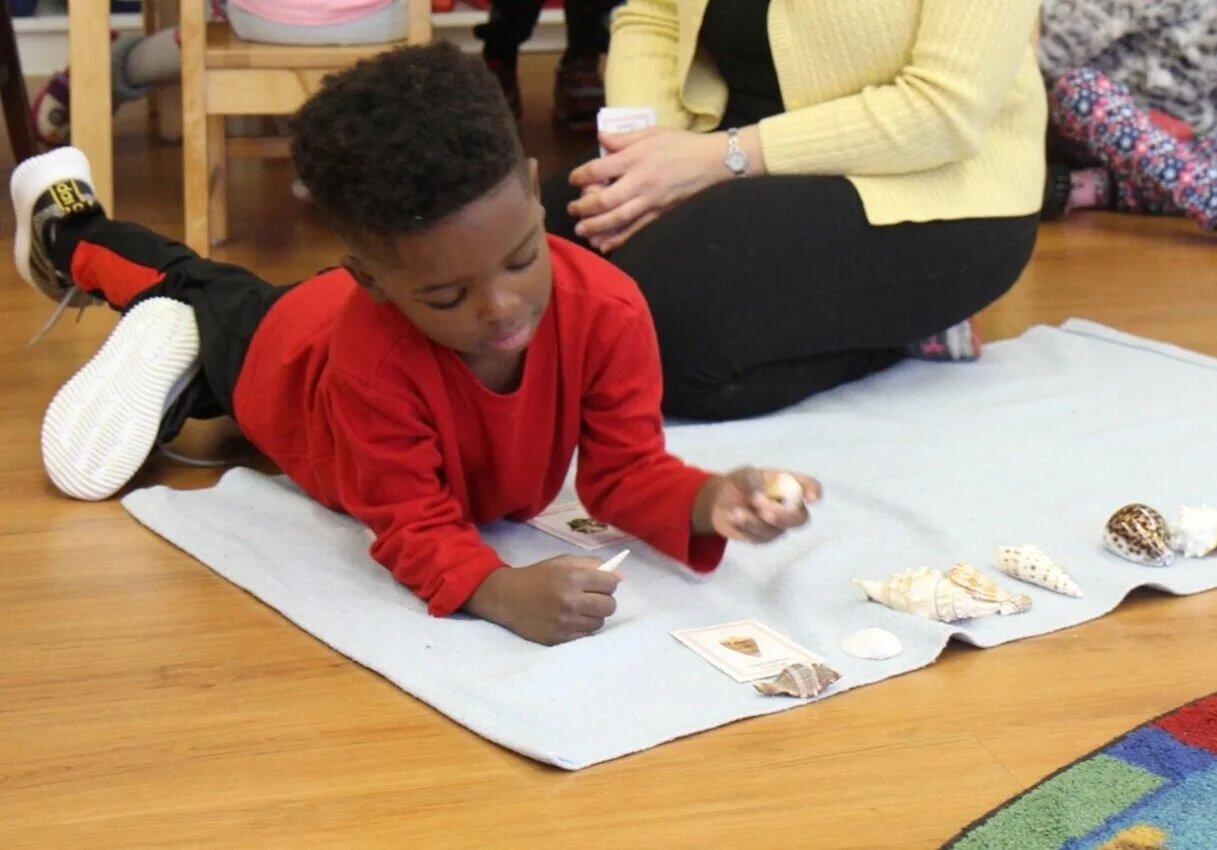
Young children have a magnificent gift. They absorb language effortlessly. In the Montessori classroom, we give them every opportunity to enrich their vocabulary as we name objects in the environment, give scientific classifications for leaf shapes and parts of animals, teach geographic names, and identify shapes, dimensions, and sizes. Using moveable alphabet and sandpaper letters, children learn the sounds of letters. Soon they are linking letters to make words, then words to make sentences. After sufficient experience with oral language and individual sounds, they advance to cursive writing and phonetic reading.
Mathematics
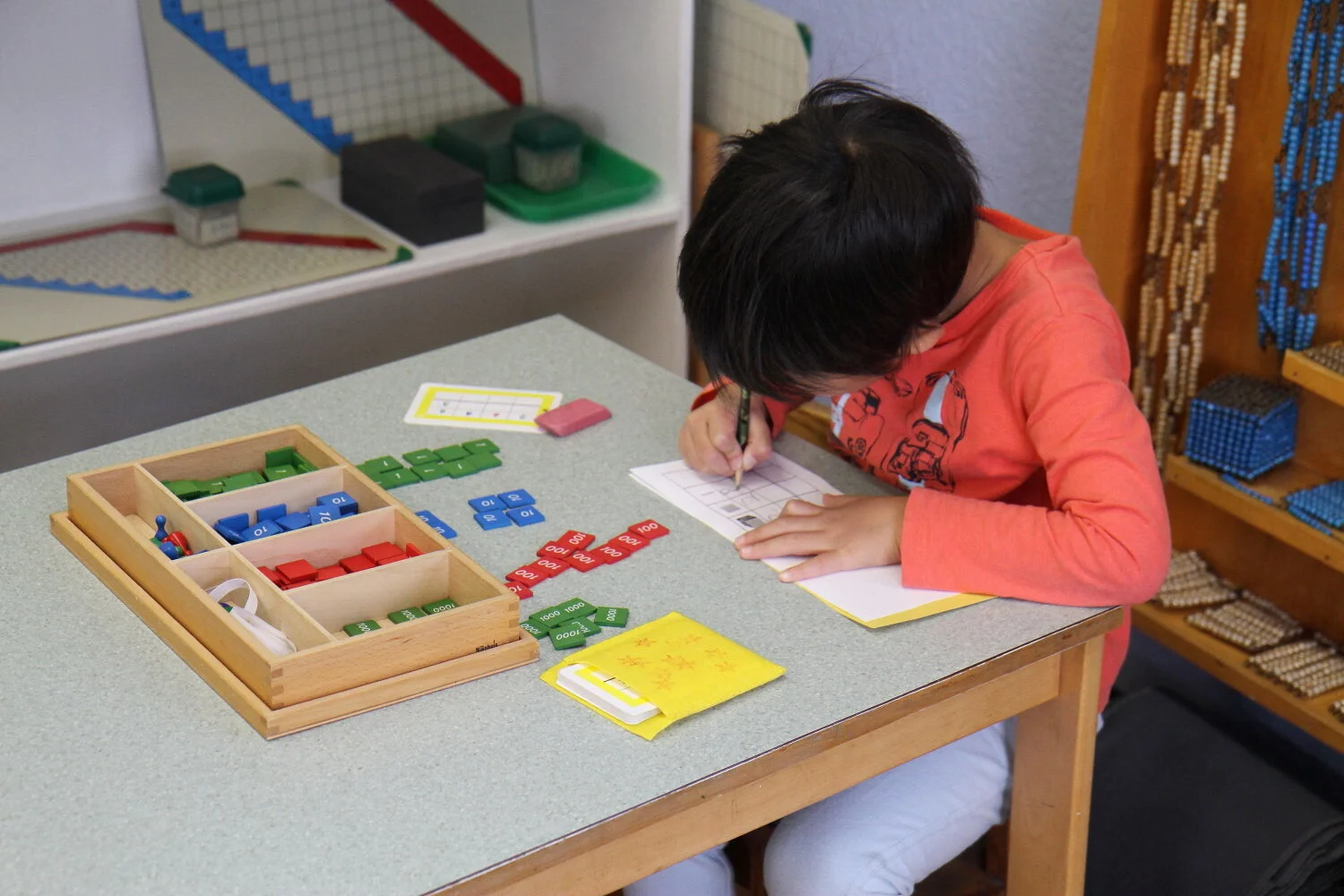
Dr. Maria Montessori believed that every human being has a mathematical mind. It is in our nature to quantify, measure, compute, estimate, and see patterns and sequences. Children’s understanding of basic numerical concepts, place value, and the operations of addition, subtraction, multiplication and division emerges from using tactile materials that allow them to visualize the abstraction of numbers. By exploring with materials that enable self-correction, children build a foundation of concrete experiences that give them a lifelong understanding of mathematical principles.
Sensorial
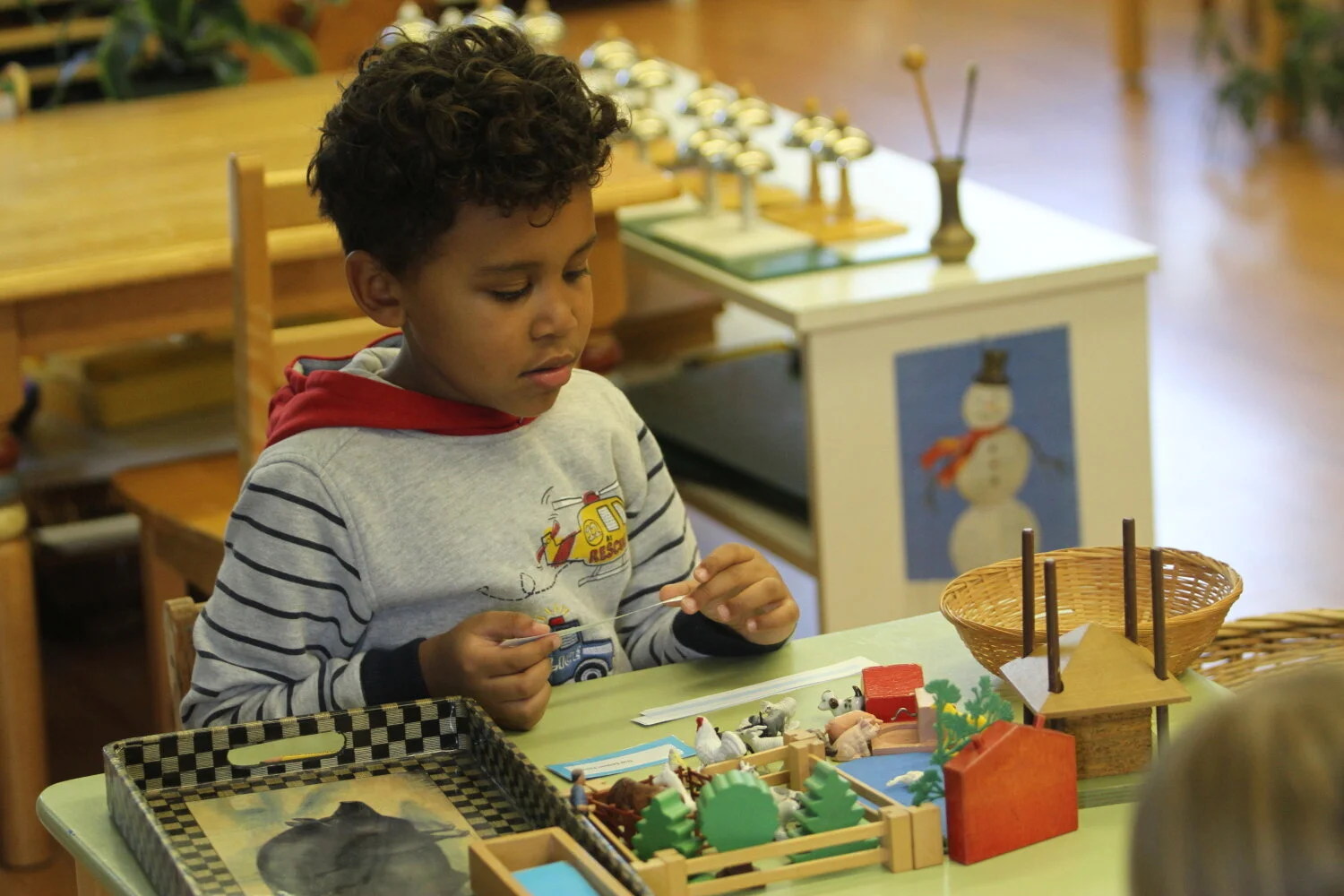
Sensorial materials are designed to heighten and refine the senses of sight, touch, sound, taste, and smell. By using all their senses, children come to understand and classify the environment. As children learn to distinguish, categorize, and compare the qualities of concrete materials, they also enrich their vocabulary and lay the foundation for understanding abstract concepts in math and geometry. Sensorial materials also develop the small muscle coordination necessary to master writing.
Cultural Areas
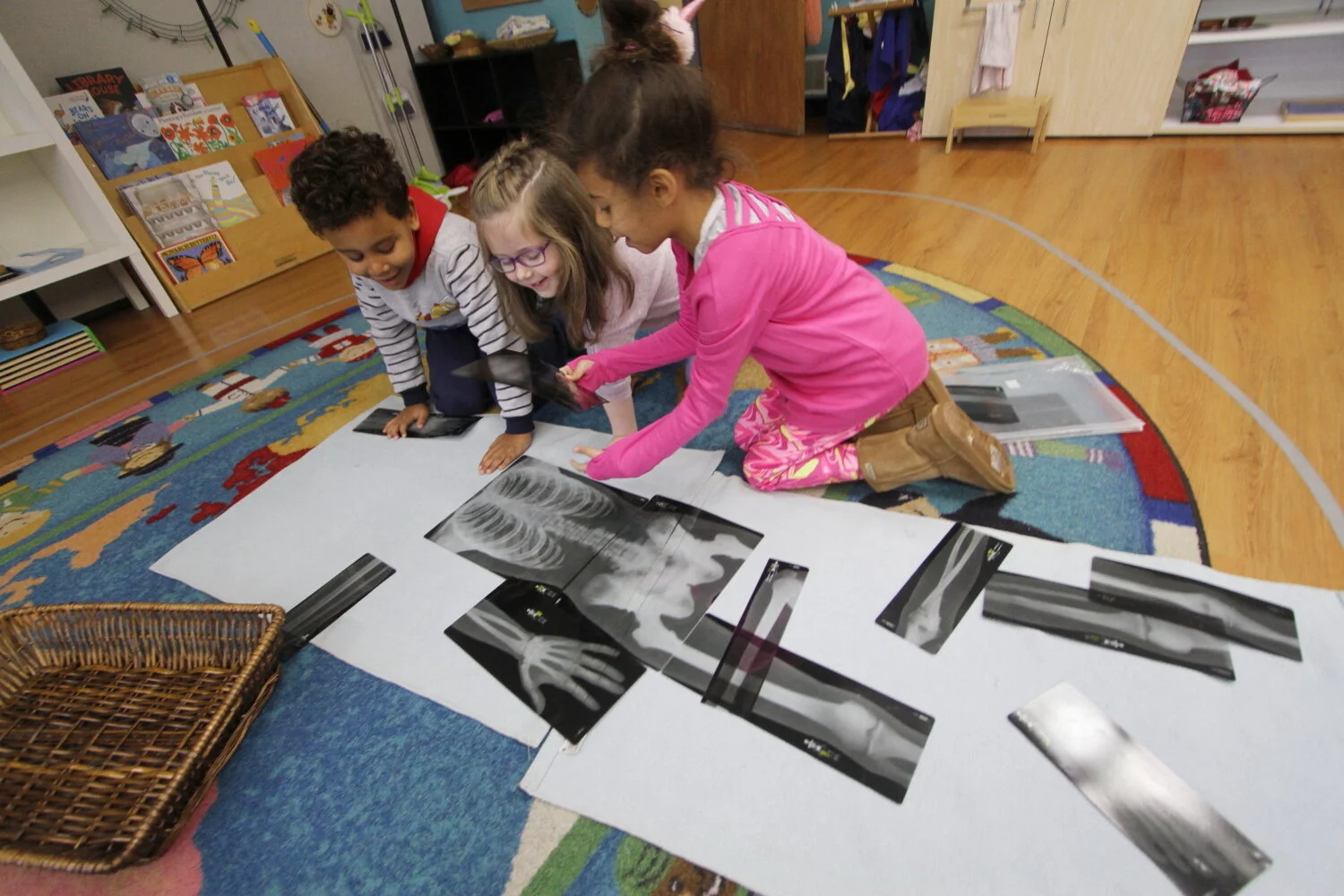
In a Montessori classroom, the natural and cultural diversity of the world is embraced. During the absorbent mind period, children explore geography, botany, zoology, science, history, art, and music. Montessori materials introduce the animal kingdom, the world of plants, and experimental science. Children learn about our planet and its diverse peoples and countries through puzzle maps, music, flags, artifacts, and the celebration of holidays.
Practical Life
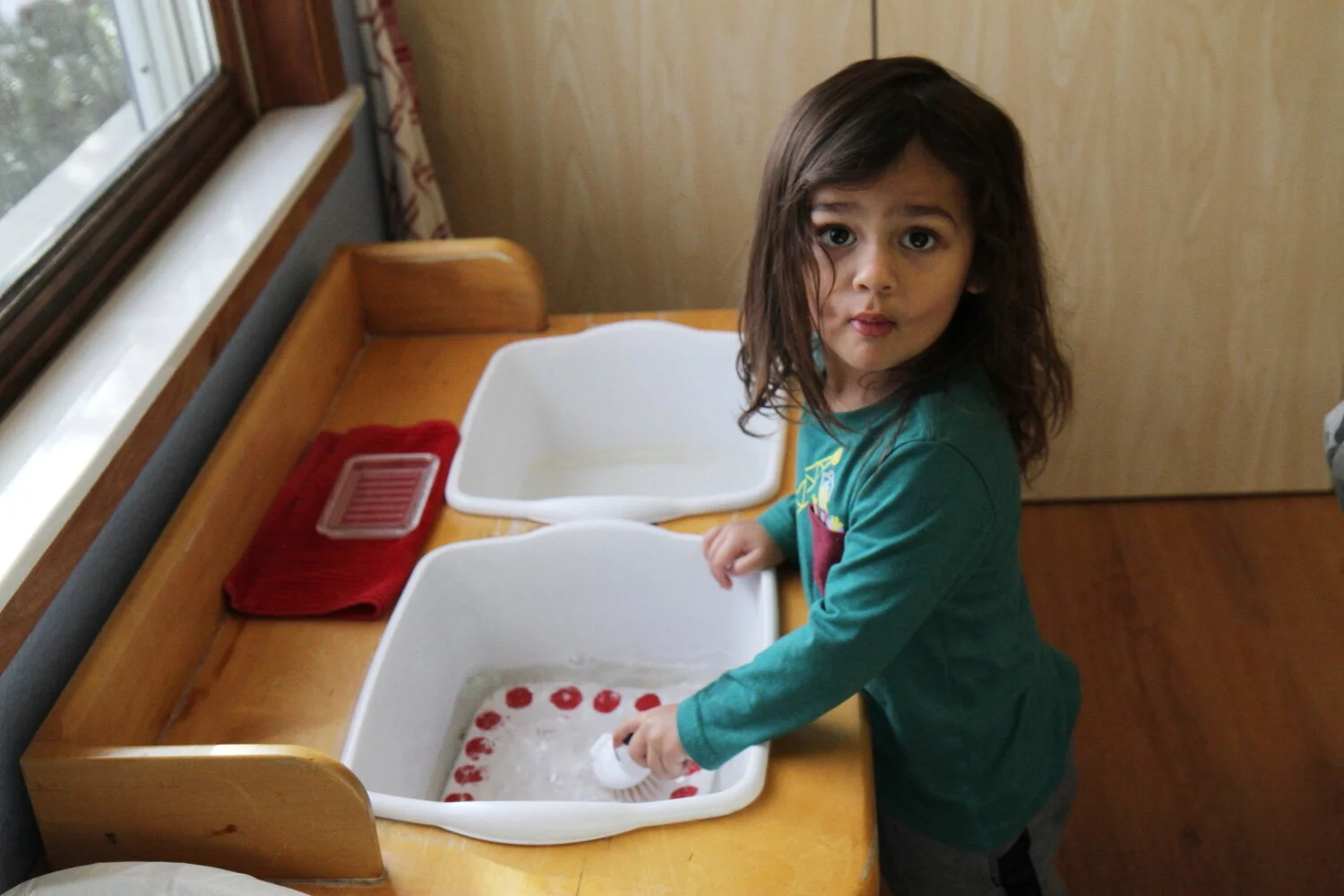
Activities of daily living prepare children to care for themselves and their environment and give each child a sense of mastery and self-confidence. By performing such tasks as sweeping, polishing, washing, and preparing food, children develop coordination, concentration, and good work habits. Lessons in grace and courtesy are also an important part of practical life. In a harmonious classroom, children learn to practice good manners and gain consideration for others.
Art, Music and Movement
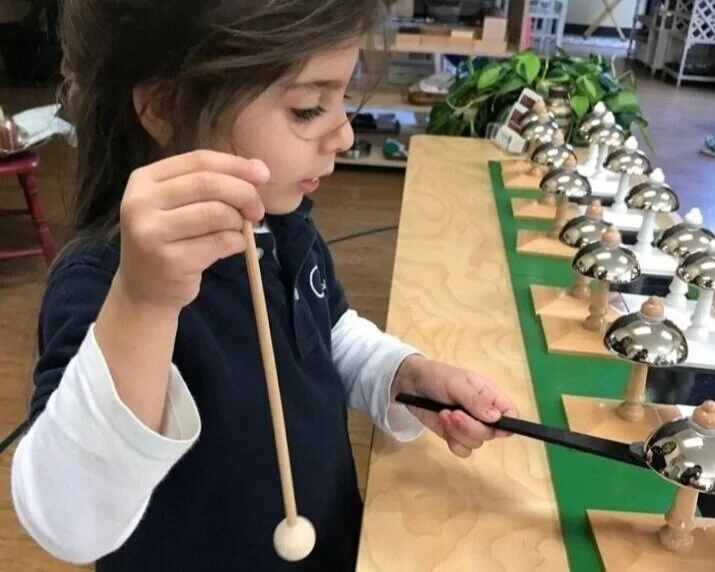
In an authentic Montessori classroom, art, movement and music are interwoven into the life of the classroom. Many Montessori lessons incorporate tracing, drawing, and illustrating. Children can also express their creativity through a variety of open-ended art activities. The Montessori music curriculum includes The Bells, individual bells that give a visual impression of the C Major scale. The bells teach discrimination of tones, pitch training, and reading and writing of music. The delicate sound of children playing the bells creates a lovely, peaceful mood in the classroom.
elementary LEARNING ENVIRONMENT

Elementary Program
Grades 1 - 5
ELEMENTARY 8AM - 3PM
After-school care available
Elementary Program
The goal of the elementary Montessori program is to prepare 6 to 12-year old children to enter adolescence as highly functioning and caring citizens of the world. At New World, we provide opportunities for every child to achieve academic excellence, but the acquisition of knowledge and skills is not our only goal. We also seek to awaken imagination, encourage independence, and help children to observe, question and explore ideas. We demonstrate and value kindness, self-discipline, compassion, and acceptance.
In the elementary classroom, children are able to make choices and explore their interests without fear of making mistakes. They prepare for the real world by working together cooperatively in an atmosphere of respect. Instead of competing with each other or focusing on grades, they grow into a community where they practice important social skills every day.
Foreign Language Program
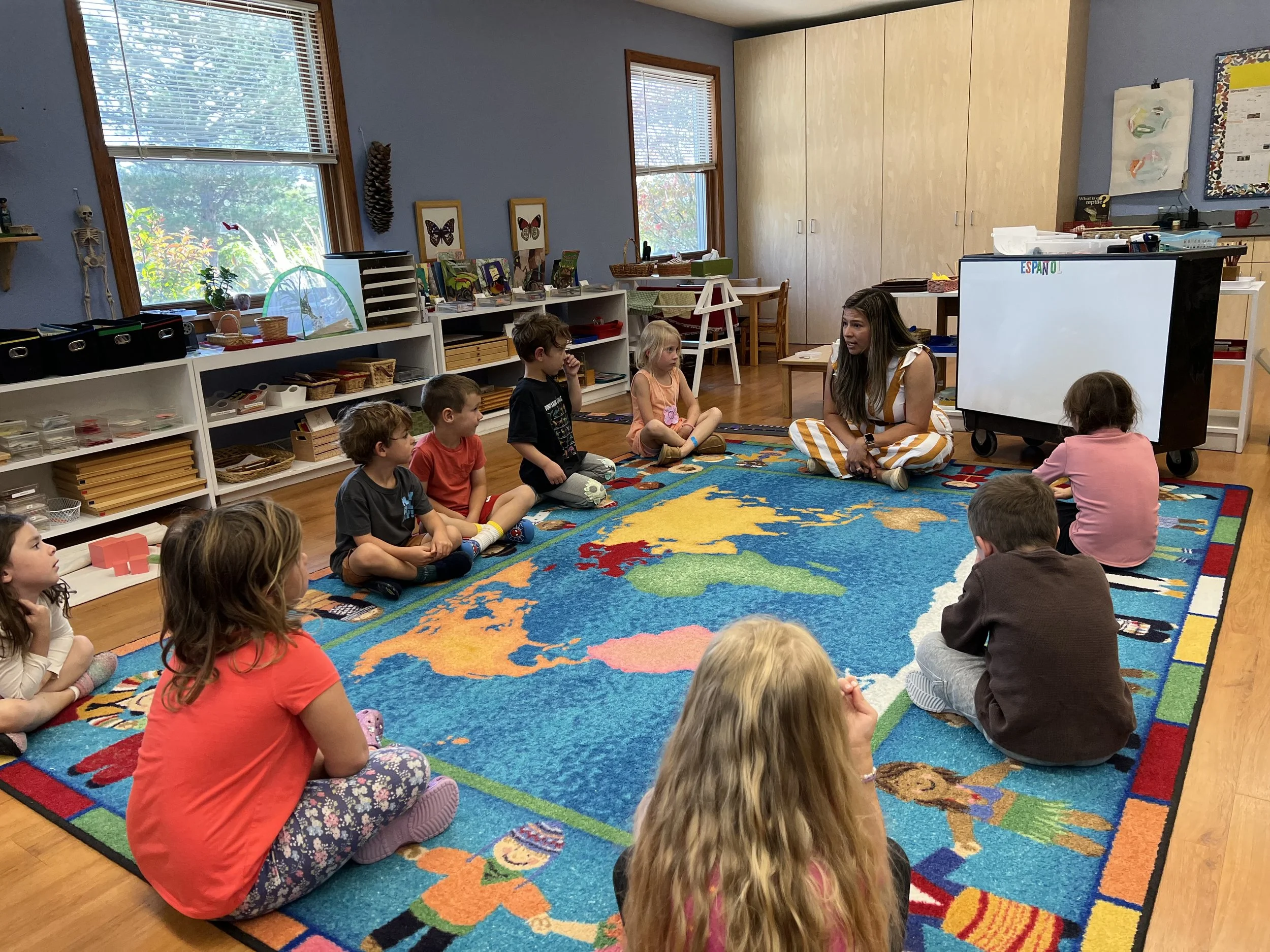
As part of our commitment to diversity, New World Montessori School provides experiences that expose children to various cultures. Our families come from a wide variety of cultural backgrounds, and we are fortunate to have native Spanish and Japanese speakers on our staff.
Research has shown that children who are exposed early to other languages display more positive attitudes to other cultures. The experience of learning a language introduces them to a broader world in ways they might otherwise have not experienced.
Exposing young children to a second language also boosts problem-solving, critical-thinking, and listening skills, in addition to improving memory and concentration. Children proficient in other languages also show signs of enhanced creativity and mental flexibility.
nature Program
““How often is the soul of man – especially in childhood – deprived because he is not allowed to come in contact with nature?””
Dr. Montessori was a scientist who had a profound reverence for the intricacies and mysteries of the natural world. Nurturing a deep connection to nature and inspiring wonder are integral to her educational approach. Dr. Montessori’s vision for schools was always a combination of indoor and outdoor classrooms. She believed that if children can see themselves as part of a greater universe, they can begin to understand the interconnectedness of all things.
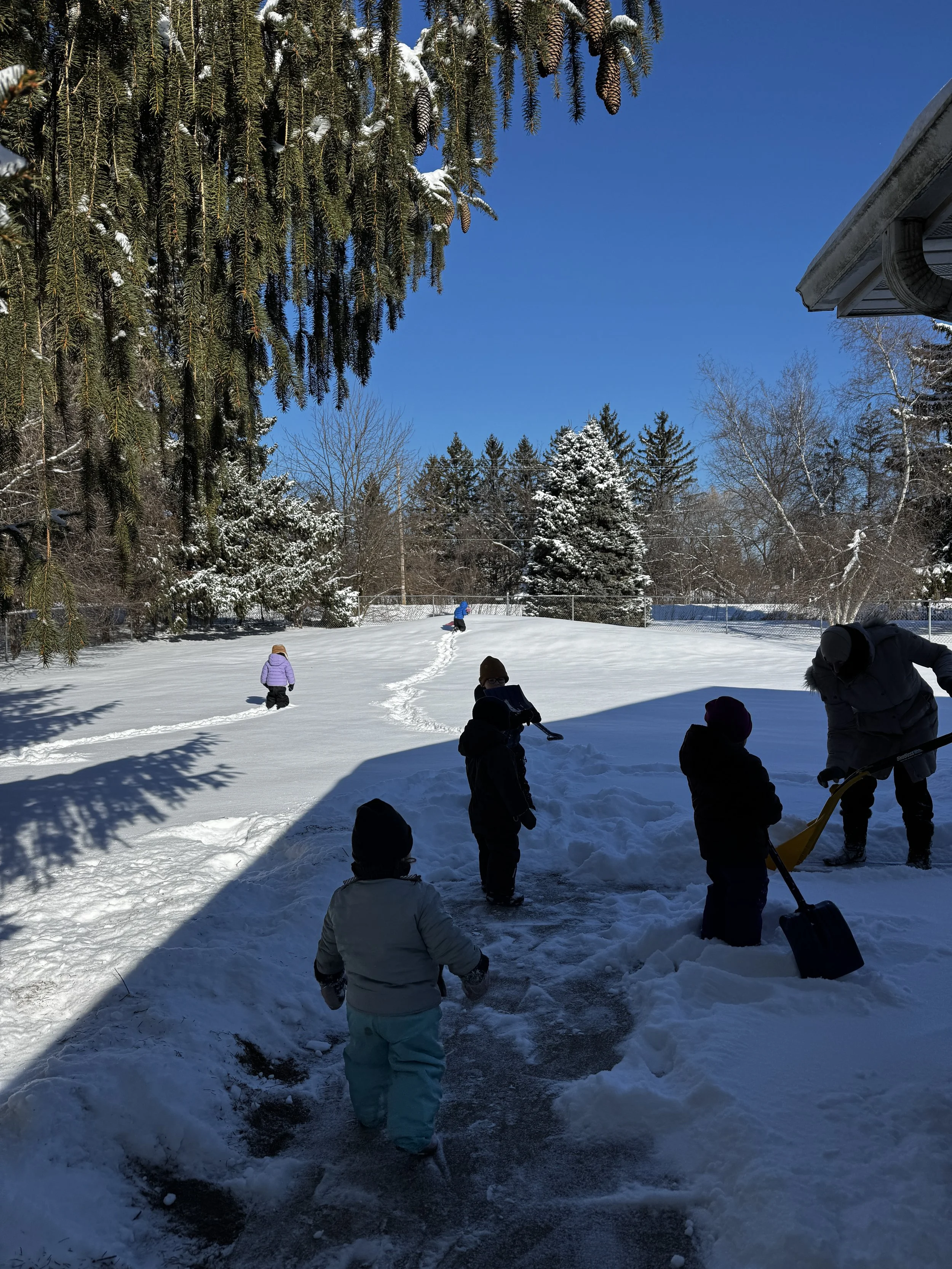
Time spent outdoors deepens every child’s awareness of interconnections and respect for all living things. Children who feel comfortable in nature also demonstrate reduced stress, an increase in curiosity, creativity and problem-solving abilities, and improved physical and emotional health.
At New World Montessori School, each classroom has direct access to our safe, fenced-in outdoor space. Our children love to spend time in those outdoor classrooms, which they do regularly as part of our Nature Study Program. In addition, our school is minutes away from the 438-acre Mequon Nature Preserve which offers forests, wetlands, fields, an observation tower, nature center and many programs.


After School program

After School Program
Available to ages 18 months - 10 yrs
DAILY 3:00 - 4:30PM
After School Program
The After School Program at New World is designed to provide a safe, comfortable, and engaging environment for Toddler, Primary and Elementary students.
After-school care is available to New World Montessori school children on a first come, first served basis. The after-school program follows the same rules and procedures that are used during the school day.
Primary and Elementary children can be independent and enjoy choosing age-appropriate materials, games, art media, and outside play time. Toddlers can take a nap, eat a snack, and enjoy each other’s company in play.
